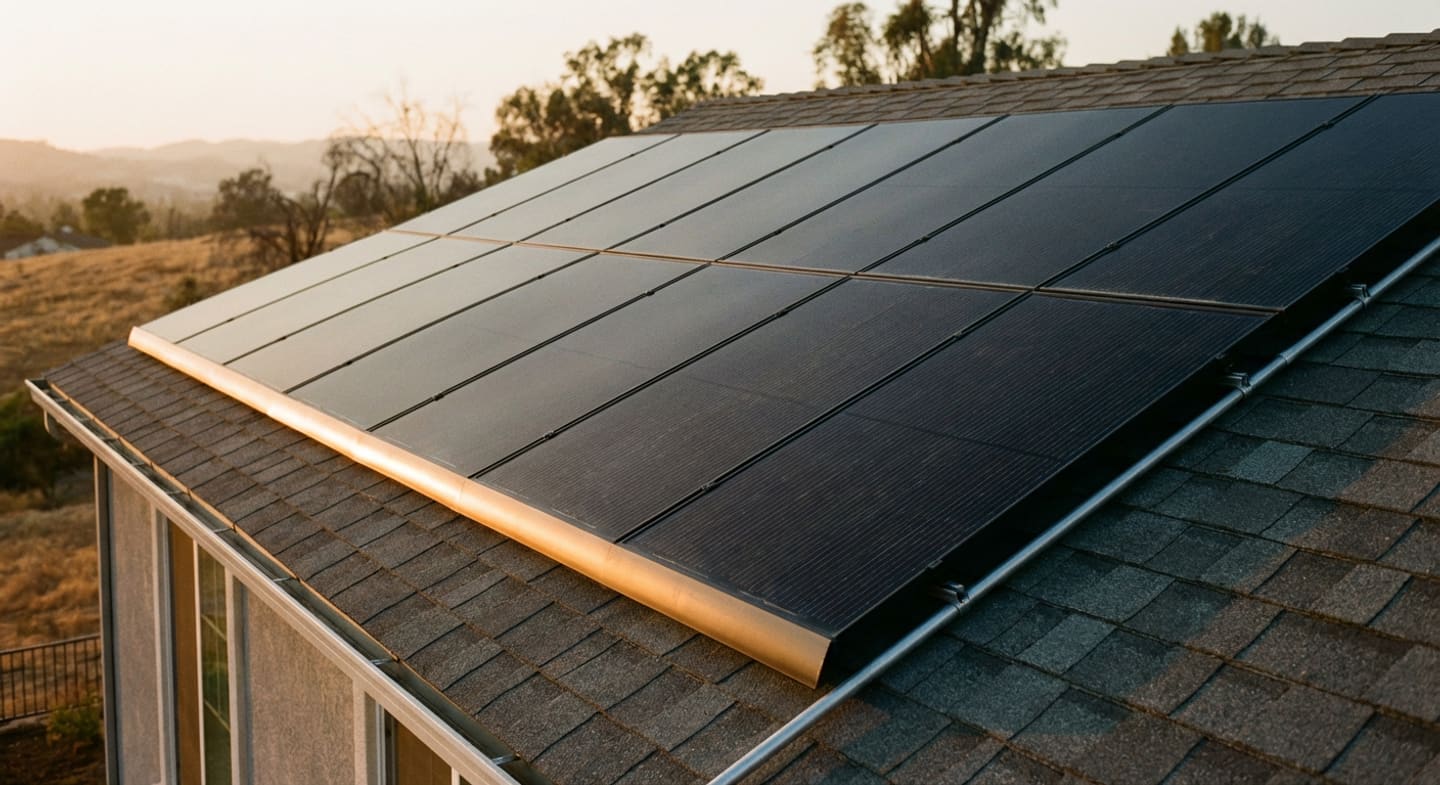
solar.png
Installing solar on a 15-year-old roof will cost you twice. The panels outlive the roof, and removing then reinstalling them when the roof fails runs thousands of dollars plus weeks of lost production. Here's how we sequence solar and roof work for LA homeowners — and when it makes sense to re-roof first.
If your existing asphalt shingle roof is over 12 years old, or your tile roof is showing degraded underlayment, re-roof before solar. It will save you money over the lifetime of the system.
Solar panels last 25–30 years. Asphalt roofs in LA last 20–25 years under typical conditions. If your roof is half-way through its life and you install solar on top, by year 10–15 of solar production the roof fails. Now you have to remove the panels, re-roof, and reinstall the panels. That removal-and-reinstallation process typically costs thousands of dollars and takes weeks, during which your solar production is zero.
Every major LA solar installer quotes a remove-and-reinstall (R&R) fee for addressing a failing roof mid-system. The fees vary but the direction is consistent: R&R is almost always more expensive than doing the re-roof up front, once you account for lost production during downtime.
Specific numbers depend on system size, roof complexity, and installer. Get quotes before you commit.
If your asphalt roof is under 8 years old with no visible degradation, solar first is fine. 17+ years of panel life remains when the roof eventually needs re-roofing, and tile or metal roofs obviously can outlast the solar system too.
If your roof is tile and in good condition, tile typically outlives solar — solar first works. But underlayment beneath the tile may be nearing end of life; that's a hidden expense.
If your roof is metal in good condition, metal outlives solar. Standing-seam metal is actually the ideal solar substrate — clamps attach without roof penetration, and you never have to worry about roof failure under the panels.
Every reputable LA solar installer — Sunrun, SunPower, Tesla, Palmetto, LA Solar Group, regional companies — requires a current roof inspection before quoting. Some require it in writing from a licensed roofer. None will install on a roof with less than 10 years of remaining life without a waiver you really don't want to sign.
We've worked alongside every major installer in LA County. They know our inspection reports. Most will schedule around our re-roof timeline if we provide projected completion dates.
Here's the typical LA sequence when a homeowner wants solar on a roof that needs re-roofing:
Total elapsed time: usually 6–10 weeks including permits. Some LA solar rebates and NEM 3.0 timing may create pressure to rush — we work with your specific deadlines.
Don't panic. Here's what happens:
Entire process usually takes 3–5 weeks. Temporary tarping protects the structure during the gap.
NEM 3.0 and SGIP. California's net-metering rules changed in April 2023 (NEM 3.0), and the Self-Generation Incentive Program keeps evolving. Rebate timing sometimes pressures homeowners to install solar before a re-roof. Before accepting that timeline, calculate total lifetime cost — usually the re-roof-first path still wins.
HOAs. LA HOAs have limited authority to restrict solar under California law (AB 634), but can specify reasonable aesthetic requirements. Tile roof with integrated solar tile (like Tesla Solar Roof or GAF Timberline Solar) may be required in historic districts.
Fire code in VHFHSZ. Solar panel arrays must preserve fire setbacks — typically 18" from ridge and 3' wide access paths. This affects panel layout and therefore system size. Good solar installers know this; some don't.
Roof warranty vs. panel warranty. Most roof material warranties explicitly exclude coverage in areas under solar panels. Our workmanship warranty still applies, but the manufacturer won't honor material defect claims for tiles under panels. Read the fine print.
Solar on an old roof is a double-payment waiting to happen. Solar on a new roof is a 25-year investment. The sequencing decision is bigger than the install decision.