insurance.png
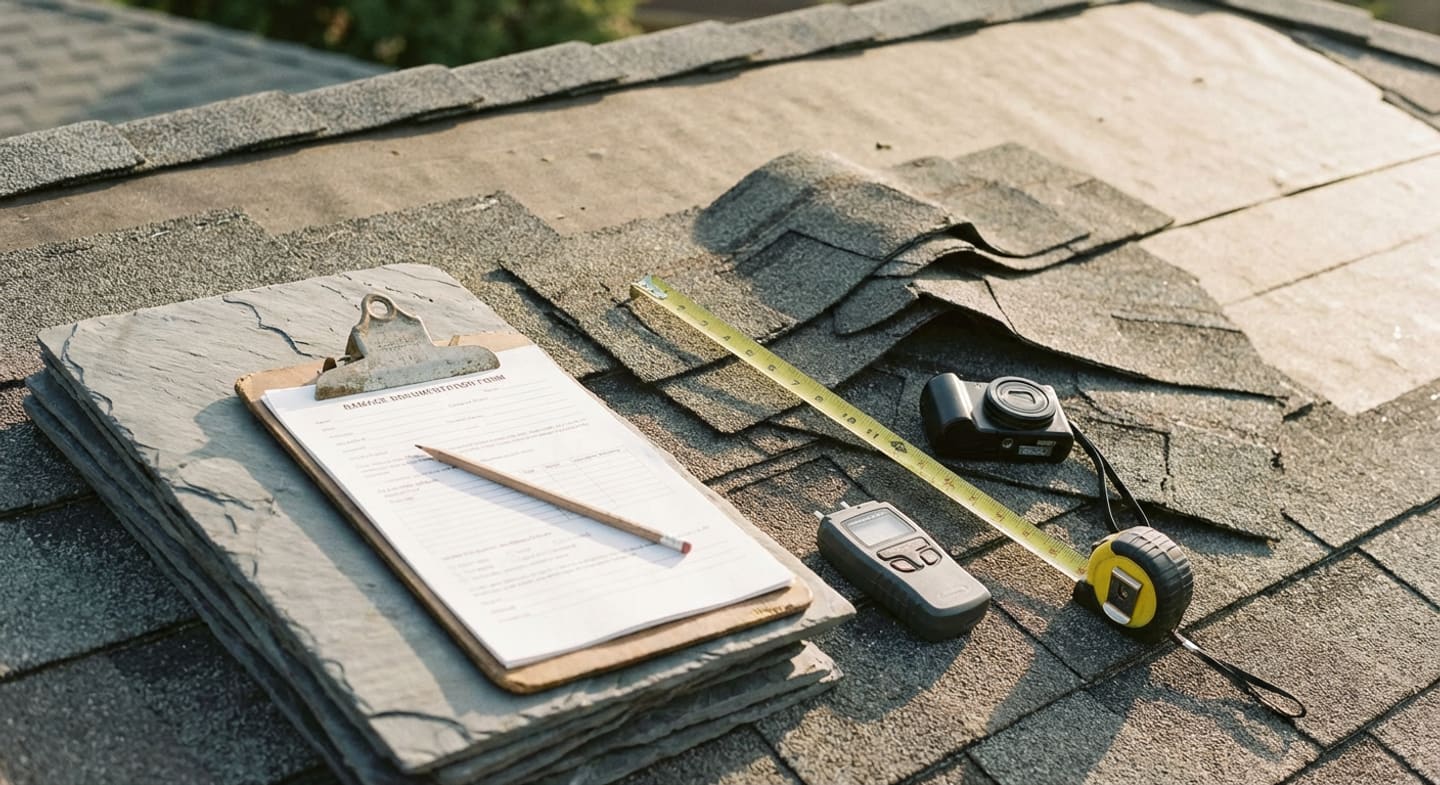
LA's insurance market has tightened dramatically. Properly documented claims still get paid quickly; improperly documented ones get denied, reduced, or dragged out for months. Here is exactly what our crews put together for every claim we handle.
Between 2023 and 2026, State Farm, Allstate, Farmers, and several smaller carriers materially restricted new-policy writing in California, with some non-renewing existing policies. The California FAIR Plan (state-mandated high-risk pool) has become the default for thousands of Westside, canyon, and hillside homeowners. Every remaining carrier has tightened claim scrutiny. Paperwork quality is now the main difference between paid and denied claims.
Adjusters process hundreds of claims. They reward clarity and penalize ambiguity. Four specific photos, in this order, handle most cases:
Email all four to yourself to preserve timestamps on a server you don't control. We do the same for every claim we handle, plus roof-plane photos, flashing close-ups, and ember-damage scans in wildfire cases.
Required in most LA claims:
Bonus documents that strengthen claims:
Wind damage. Santa Ana events, winter storm gusts, microburst downbursts. Uplifted shingles, displaced tiles, cracked ridge, torn fascia. NOAA wind speed data from nearby stations is critical.
Hail damage. Less common in LA than other regions but does happen — especially in Pasadena, Glendale, and the Valley during winter cold-fronts. Hail dents on aluminum fascia and gutters are the tell; we document with paint-test grids.
Atmospheric-river rain infiltration. Not a "storm" in the traditional sense, but a named storm event with NOAA rainfall records creates a claim basis if the infiltration caused interior loss.
Wildfire ember damage. Post-Red-Flag events in Topanga, Malibu, Palisades, Brentwood. Ember burns, thermal cracks, and smoke-soot intrusion. Documentation must happen before any cleanup.
Tree / wind-driven debris impact. A branch through the roof is a specific peril covered under most policies. Photos before the tree is removed are essential.
Most LA-area insurers use Xactimate — a price-book software for claim estimating. Their contractor network quotes to Xactimate numbers. That's fine for routine work; it underestimates anything that requires specialty matching, historic tile, or complex flashing detail.
If your adjuster's scope feels light, ask your contractor to produce a supplemental estimate with line-item justification for what's missing. Written correctly, supplementals are paid in most cases. We produce them as a standard part of our claim handling.
"Pre-existing damage." Addressed by pre-loss documentation. If your maintenance report shows the roof was in good condition 60 days before the storm, this defense falls apart.
"Wear and tear, not storm damage." Addressed by matching damage patterns to wind direction and NOAA event correlation. Random shingles missing = wear. All shingles lifted on one exposure matching the storm's wind vector = storm.
"Improper maintenance." Addressed by producing your maintenance records. This is why the documentation cost of a maintenance plan pays for itself on a single claim.
"Claim filed outside the policy window." File promptly — most carriers require notification within 60–90 days. Tarp first if needed to prevent further loss; document the tarp installation as mitigation work (which is also reimbursable).
Most LA homeowner policies carry a $2,500 or 1% of dwelling value deductible, plus a higher wildfire deductible in VHFHSZ areas. You pay the deductible on any claim.
Actual Cash Value (ACV) vs. Replacement Cost Value (RCV): If your policy is RCV, the insurer pays ACV first (depreciated value), then reimburses the depreciation difference when you show the work was completed. Most policies. Some are ACV only and the depreciation is never recovered. Check your declarations page.
When we handle a claim end-to-end: inspection and photo dossier, adjuster meeting, scope negotiation, supplemental estimates if needed, permit and install coordination, depreciation recovery documentation, final close-out package. The inspection is free if we handle the claim. See roof inspections.
A properly documented claim is usually paid. An improperly documented one is usually contested. The difference is a few hours of photography and paperwork.